The Indonesian government and The Ocean Cleanup Sign an MoU to Reduce Plastic Waste from Rivers to the Ocean
Back to pressJakarta, 3 February 2026
- The Indonesian government continues to strengthen efforts to control plastic waste pollution as part of protecting aquatic ecosystems and strengthening national food security. Through the Coordinating Ministry for Food (Kemenko Pangan), the government is encouraging cross-sector collaboration and international partnerships to accelerate waste management from upstream to downstream.
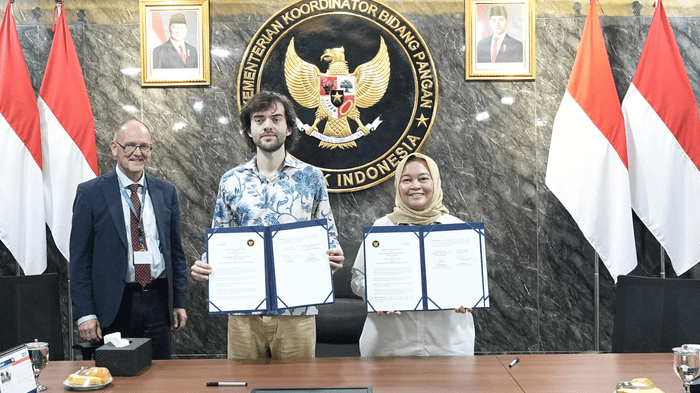
As part of this effort, Kemenko Pangan has established a partnership with the international organization The Ocean Cleanup, formalized through the signing of a Memorandum of Understanding (MoU) on reducing plastic waste entering the ocean through rivers in Indonesia. The MoU signing took place on Tuesday, February 3, 2026, at the Graha Mandiri Building, Central Jakarta, and was signed by Dr. Ir. Nani Hendiyarti, M.Sc., Deputy for Coordination of Food Affordability and Security at Kemenko Pangan, and Boyan Slat, Founder and Chief Executive Officer (CEO) of The Ocean Cleanup.
The event was attended by representatives from relevant ministries and institutions, including the Ministry of Public Works, the Ministry of Environment, the Ministry of Tourism, and the Ministry of Home Affairs, as well as international partners from the Government of the Kingdom of the Netherlands and The Ocean Cleanup.
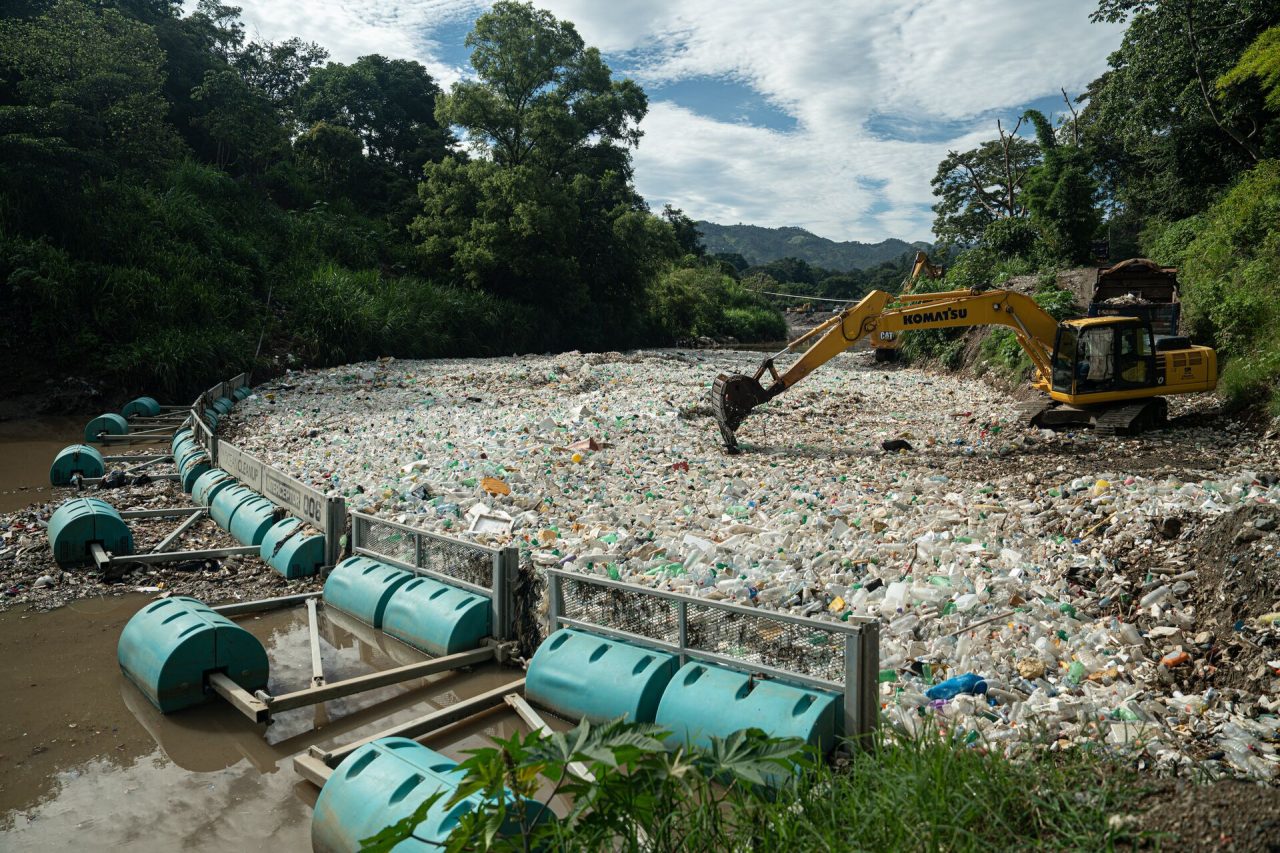
This collaboration affirms the Coordinating Ministry for Food’s role in coordinating policies across ministries and institutions, particularly in plastic waste management, which directly impacts water quality, the sustainability of the fisheries sector, and the national food system. Through this MoU, the Coordinating Ministry for Food and The Ocean Cleanup are committed to promoting the implementation of end-to-end river cleaning systems, known as Interceptors™, as a measure to prevent plastic waste from entering the ocean, in line with national waste management policies and the development of a circular economy.
The Ocean Cleanup has already deployed 21 Interceptors in 11 cities across ten different countries, removing over 45M kg (100M lbs) of trash from rivers and oceans. This includes existing Interceptor deployments in DKE Jakarta and Tangerang Regency.
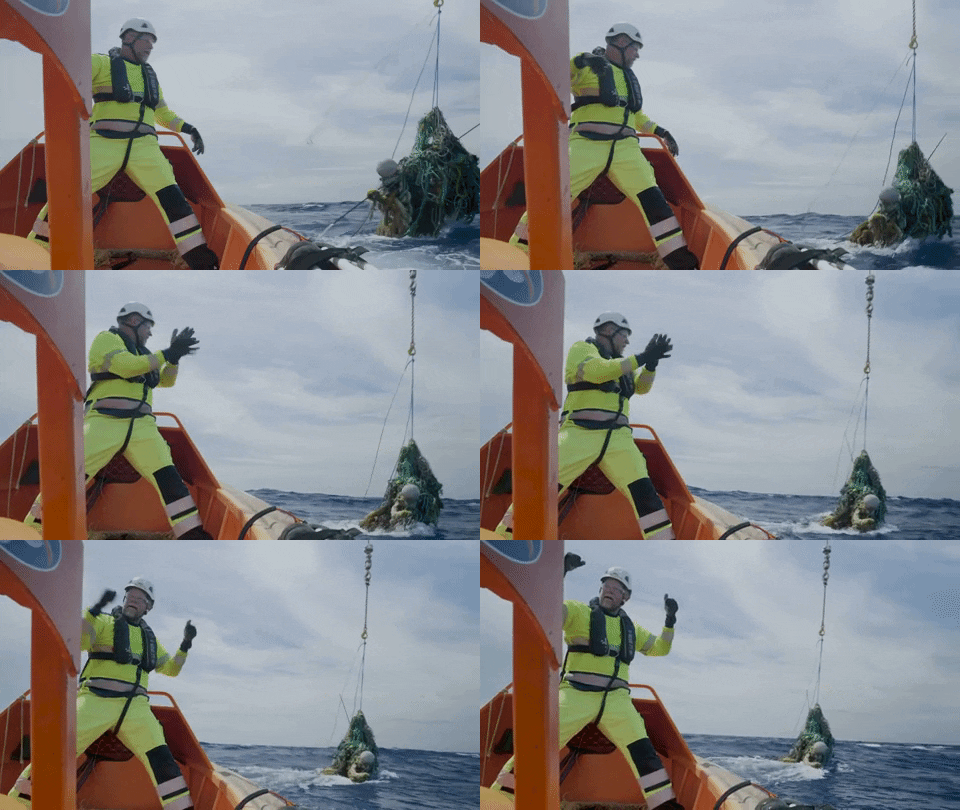
Through their ambitious 30 Cities Program, the global non-profit now aims to reduce up to one-third of all plastic flowing from the world’s rivers into the ocean by 2030. The MoU will help facilitate future deployments across a number of locations in Indonesia.
Boyan Slat said: “We develop and scale a full cleanup solution where our technology and data integrate with a network of partners, communities, and waste-management systems to stop plastic before it reaches the ocean while also removing legacy plastic pollution from coastlines and the ocean.
“This collaboration with the Coordinating Ministry for Food and Agriculture will further help to strengthen and accelerate our work across Indonesia as part of our mission to rid the world’s oceans of plastic using our innovative Interceptor solutions.”
In addition to signing the MoU, the meeting also discussed plans for implementing future collaboration, including identifying potential locations, coordinating mechanisms with relevant ministries and institutions, local governments, and engaging other stakeholders. This collaboration is expected to accelerate the achievement of the national target of reducing plastic waste, strengthen the protection of aquatic ecosystems, and contribute significantly to national food security through sustainable fisheries resources and a healthy marine environment.
Moving forward, the Coordinating Ministry for Food and Agriculture will continue to foster cross-sector and cross-regional synergy to ensure the implementation of this collaboration provides broad and sustainable benefits.
About The Ocean Cleanup
The Ocean Cleanup is a nonprofit organization that develops and scales technologies to rid the oceans of plastic. By conducting extensive research, engineering scalable solutions, and partnering with governments, industry, and like-minded organizations, The Ocean Cleanup is working to stop plastic inflow via rivers and remove legacy plastic already polluting the oceans. As of December 2025, the non-profit has collected over 46 million kilograms (101.4 million pounds) of trash from aquatic ecosystems around the world. Founded in 2013 by Boyan Slat, The Ocean Cleanup now employs a multi-disciplined team of approximately 200 people. The organization is headquartered in Rotterdam, the Netherlands, with international operations in 10 countries.